Country
Companies10 of 26
tink.com
TinkFeatured
tink.com🇸🇪 Sweden
Tink is a Swedish open banking platform that connects to over 3,000 financial institutions across Europe, solving the friction between fintech ambition and banking reality. Rather than building their own infrastructure from scratch, startups and established financial companies plug into Tink's APIs to instantly access account data, initiate payments, and orchestrate complex financial workflows without dealing with legacy banking plumbing.
The company sits at the intersection of three powerful trends: the shift toward embedded finance, the regulatory tailwinds of PSD2 and Open Banking, and the growing irrelevance of traditional bank APIs. While competitors chase headlines with consumer-facing apps, Tink operates in the less glamorous but infinitely more valuable B2B2C layer—the infrastructure that quietly powers dozens of European fintech winners.
What sets Tink apart is execution at scale. Their data aggregation and payment initiation services work reliably across fragmented European banking systems, which is harder than it sounds. Most fintechs eventually realize they need a Tink-like layer to escape the nightmare of maintaining connections to hundreds of banks with different technical standards and frequent updates.
That importance hasn’t gone unnoticed. In 2022, Tink was acquired by Visa, a move that underscored just how critical open banking infrastructure has become. The acquisition gave Tink both validation and reach, positioning it even closer to the core of the global payments ecosystem.
Tink represents the unglamorous backbone of modern European fintech—the kind of company that doesn't dominate headlines but becomes quietly indispensable to everyone building financial products.
Categories
Open BankingFinancial InfrastructureEmbedded Finance
1
upvotes

mollie.com
Mollie
mollie.com🇳🇱 Netherlands
Mollie is a payment infrastructure company built for the internet age. Rather than forcing merchants through the byzantine setup process traditional payment processors demand, Mollie strips away the friction. You connect a few APIs, define your payment methods, and suddenly you're accepting everything from credit cards to local payment schemes across Europe—all without the operational headache of managing multiple provider relationships.
What sets Mollie apart is its uncompromising focus on developer experience. The company treats its payment platform the way SaaS companies treat their core products: with obsessive attention to documentation, dashboard clarity, and API elegance. Mollie handles the compliance complexity, the fraud monitoring, the settlement logistics. Merchants get a single pane of glass.
For a continent fragmented by payment preferences—iDEAL in the Netherlands, Bancontact in Belgium, SEPA everywhere—Mollie's multi-method approach feels essential rather than nice-to-have. The company works at the intersection of European e-commerce growth and the technical debt of legacy payment infrastructure, making it indispensable to thousands of online businesses that would rather build products than negotiate with acquiring banks.
Mollie has become something like the connective tissue of European payments: not as visible as the brands merchants serve, but embedded in the transaction flows of digital commerce across the continent.
Categories
PaymentsFinancial Infrastructure
1
upvotes
adyen.com
Adyen
adyen.com🇳🇱 Netherlands
Adyen is the global payments infrastructure that powers the world's biggest brands. Founded in Amsterdam and now operating across every major market, it's the connective tissue between retailers, their customers, and the financial system—processing everything from online checkouts to in-store transactions to marketplace payouts in a single, unified platform.
What sets Adyen apart is its refusal to operate as a traditional payments middleman. Instead of bolting together separate processors, gateways, and acquirers, it built its own infrastructure from the ground up, meaning faster settlement, lower friction, and genuine transparency on what you're actually paying. You see this philosophy everywhere: merchants get real-time visibility into their payments, developers integrate once and reach hundreds of payment methods, and the company has stayed agnostic to trends—it processes crypto as easily as it processes credit cards, embedded payments as easily as it processes commerce.
In a market crowded with legacy processors and upstart fintechs, Adyen occupies a unique position: it's genuinely global without being a sprawling conglomerate, technically sophisticated without being inaccessible, and profitable without relying on venture capital.
For enterprises serious about payments—whether they're selling fashion, booking flights, or managing marketplaces—Adyen represents the modern alternative to fragmented, outdated payment stacks.
Categories
PaymentsFinancial InfrastructureEmbedded Finance
0
upvotes
blockchain.com
Blockchain.com
blockchain.com🇬🇧 United Kingdom
Blockchain.com is one of the oldest and most-visited crypto infrastructure platforms in the world, operating as a bridge between traditional finance and digital assets. The company runs a full-stack crypto ecosystem—a blockchain explorer that millions use to track transactions, a self-custody wallet that puts users in control of their private keys, and a suite of institutional-grade services for serious players. Where most crypto platforms treat blockchain as a trading venue, Blockchain.com treats it as infrastructure. The platform serves retail users seeking transparency and control, developers building on-chain applications, and institutions entering crypto with proper compliance frameworks. The company has maintained a distinctly crypto-native stance while gradually building enterprise services that acknowledge regulatory reality. Its wallet remains one of the most downloaded in the space, offering both simplicity for newcomers and advanced features for power users. Blockchain.com sits at an interesting inflection point in fintech—old enough to have survived multiple market cycles, serious enough to work with regulators, yet still fundamentally aligned with decentralized principles. The platform's role in the broader landscape is foundational: it enables crypto participation across the entire user spectrum, from curious individuals to multinational corporations managing digital asset reserves.
Categories
Crypto & BlockchainFinancial Infrastructure
0
upvotes
fenergo.com
Fenergo
fenergo.com🇮🇪 Ireland
Compliance has long been the unglamorous backroom operation of financial services—heavy, expensive, and often painfully slow. Fenergo flips that script by turning regulatory friction into operational advantage. The Dublin-based software company automates the gruelling work of onboarding clients, managing their data, and staying compliant with an ever-shifting maze of regulations. What banks and investment firms once treated as a cost center, Fenergo repositions as competitive edge.
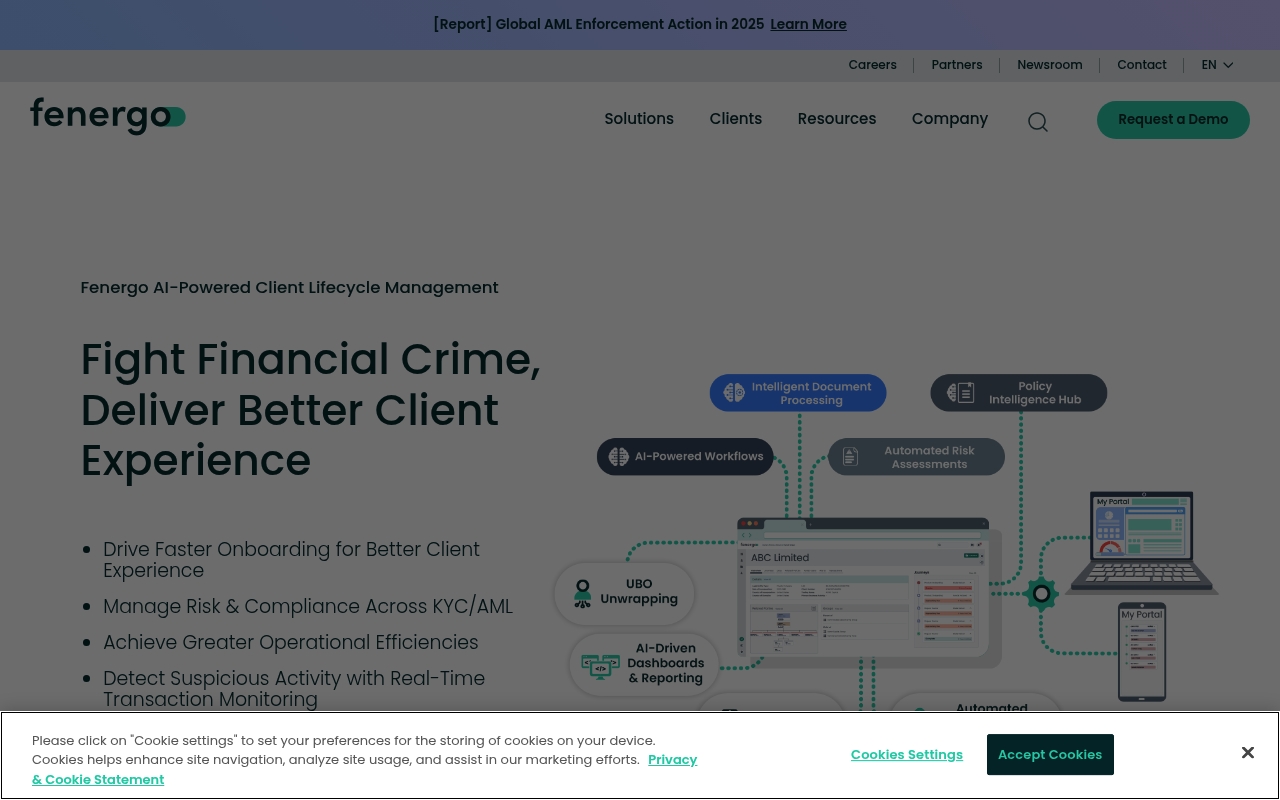
At its core, Fenergo is a digital client lifecycle management platform. It consolidates onboarding, KYC, AML screening, sanctions checks, and ongoing regulatory monitoring into a single, integrated workflow. Rather than legacy institutions juggling multiple point solutions and manual spreadsheet cultures, Fenergo orchestrates the entire client journey—from first interaction through renewal—in a single intelligent system. The software ingests regulatory data, flags anomalies, and automates approvals where rules allow, freeing compliance teams to focus on judgment calls that actually require human expertise.
What sets Fenergo apart in a crowded RegTech space is its disciplined focus on the regulated financial institution as customer, not the consumer. While plenty of fintechs chase sexy consumer-facing applications, Fenergo has built deep, sticky relationships with banks, asset managers, and brokers who need sophisticated, audit-proof compliance infrastructure. It operates at institutional scale—handling millions of client records, complex entity hierarchies, and regulatory jurisdictions spanning continents.
In an era when regulatory fines have become nine-figure line items and reputational damage from compliance failures can tank a bank's stock price, Fenergo sits at the nerve center of institutional risk management. It's not the flashy side of fintech, but it's arguably the most essential.
Categories
RegTechIdentity & KYCFinancial Infrastructure
0
upvotes
yapily.com
Yapily
yapily.com🇬🇧 United Kingdom
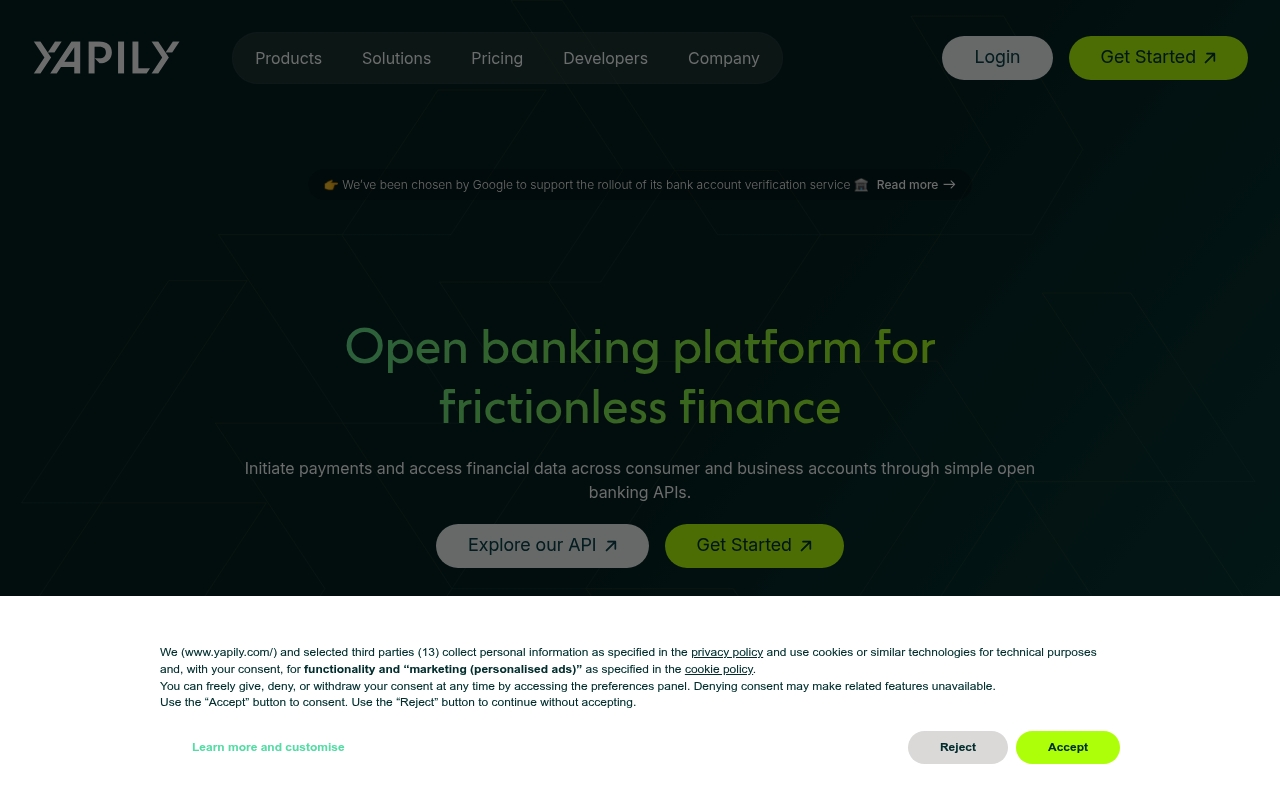
Yapily sits at the intersection of open banking and embedded finance, building the plumbing that lets fintech companies and enterprises tap into banking data and payments without reinventing the wheel. Founded in 2016, the London-based company operates as an API infrastructure layer—connecting to banks across Europe and beyond to unlock account information, payment initiation, and consent management at scale.
What makes Yapily different is how it abstracts away the complexity of working with hundreds of banks and their inconsistent technical standards. Rather than forcing developers to build individual integrations for each bank's API, Yapily provides a unified interface that normalizes everything. It's the translator between your app and the messy reality of legacy banking infrastructure.
The company operates in the B2B2C space, partnering with fintechs, neobanks, and enterprise software providers who need banking connectivity but lack the resources to build it themselves. Their customer base spans lending platforms, wealth apps, accounting software, and payment orchestration layers—essentially anyone whose product benefits from real-time access to customer bank accounts or the ability to initiate payments.
Yapily's positioning is deliberately unsexy: they're infrastructure, not consumer-facing. But that's precisely the point. In a landscape crowded with consumer fintechs chasing headlines, Yapily has built a quiet, profitable business serving the builders themselves. They're to open banking what Stripe is to payments—the backbone that lets innovation happen faster.
Categories
Open BankingFinancial InfrastructureEmbedded Finance
0
upvotes
token.io
Token
token.io🇬🇧 United Kingdom
Token is a London-based open banking platform that sits at the intersection of infrastructure and consumer experience, making API-driven financial connectivity feel less like plumbing and more like a natural part of how money moves. Rather than asking users to log into their banks manually or hand over passwords, Token handles account aggregation and payment initiation through direct bank connections—the infrastructure most fintech apps and traditional banks should have built themselves but didn't.
The company's core insight is that open banking is only useful if it actually works across borders, across device types, and across the chaos of fragmented financial systems. Token's platform standardizes this mess, letting fintechs, banks, and payment companies offer seamless experiences without getting bogged down in regional variations or legacy bank APIs that still feel like they were written in 2003.
What sets Token apart in the European market is its focus on developer experience without sacrificing enterprise-grade security and compliance. While competitors offer raw API access or clunky consent flows, Token treats the entire interaction—from user authentication to transaction confirmation—as a product problem, not just a technical one. They're essentially the connective tissue that lets modern financial products actually work at scale.
Token's role in fintech infrastructure means it powers an invisible layer: the moment you authorize a payment or link an account in an app that "just works," Token's orchestration is likely running underneath. That's the kind of foundational utility the ecosystem desperately needs.
Categories
Open BankingFinancial InfrastructureDigital Banking
0
upvotes
wallester.com
Wallester
wallester.com🇪🇪 Estonia
Wallester is a European fintech infrastructure company that makes it simple for other businesses to issue, manage, and distribute payment cards at scale. Rather than wrestling with legacy banking systems and complex integrations, companies use Wallester's APIs and platforms to embed card programs directly into their own products—think neobanks, fintechs, and platforms that need white-label card solutions without the operational overhead. The company handles the technical plumbing: card issuance, real-time transaction processing, compliance, and customer-facing controls, all delivered through clean, developer-friendly APIs. Wallester operates across multiple European markets and works with everyone from emerging challenger banks to established financial institutions looking to modernize their card infrastructure. What sets Wallester apart is its focus on removing friction from the card-issuing process. Most issuers are bound to cumbersome core banking relationships or have to build entirely custom solutions. Wallester sits in the middle, offering a turnkey platform that scales with demand without forcing companies to reinvent core banking. It's become a quiet backbone for European fintechs that need cards fast, reliably, and without the bureaucracy. The company represents a broader trend in fintech infrastructure: the unbundling of banking services into modular, API-first components that let smaller players compete with traditional incumbents.
Categories
Financial InfrastructurePaymentsEmbedded Finance
0
upvotes
rampnetwork.com
Ramp
rampnetwork.com🇵🇱 Poland
Ramp is rewriting how companies spend money. Built for finance teams tired of spreadsheets and manual processes, it combines a corporate card, expense management, and accounting integrations into a single platform that actually talks to the software finance teams already use. Most corporate card programs feel like they were designed in 1995. Ramp feels like software built this decade—mobile-first, API-forward, and deeply integrated with tools like NetSuite and QuickBooks. The company started by solving a real problem: CFOs and controllers wasting hours reconciling card statements and expense reports. Instead of patching that broken workflow, Ramp replaced it entirely. You get a card, real-time spending controls, automated categorization, and instant syncing to your accounting system. No more manual entries, no more approval bottlenecks, no more spreadsheet chaos. The platform goes deeper than most competitors by combining physical and virtual cards with embedded controls—spend limits by department, merchant category, or individual employee. Finance teams can actually enforce policy in real time rather than auditing violations weeks later. Ramp operates in a crowded space, but it's differentiated by speed and simplicity. Where competitors try to be everything to everyone, Ramp has kept focus on what CFOs actually care about: reducing manual work, improving visibility, and cutting unnecessary spending. Its integration-first approach means it's not trying to replace your entire finance stack—it's designed to slot in and make your existing tools work harder. For mid-market companies tired of manual expense management and lacking the complexity of enterprise-grade solutions, Ramp has become the obvious choice. It's also been ruthless about profitability, reaching positive unit economics early, which matters in a category where many competitors burned through billions before proving their model worked.
Categories
SME FinancePaymentsFinancial Infrastructure
0
upvotes
evervault.com
Evervault
evervault.com🇮🇪 Ireland
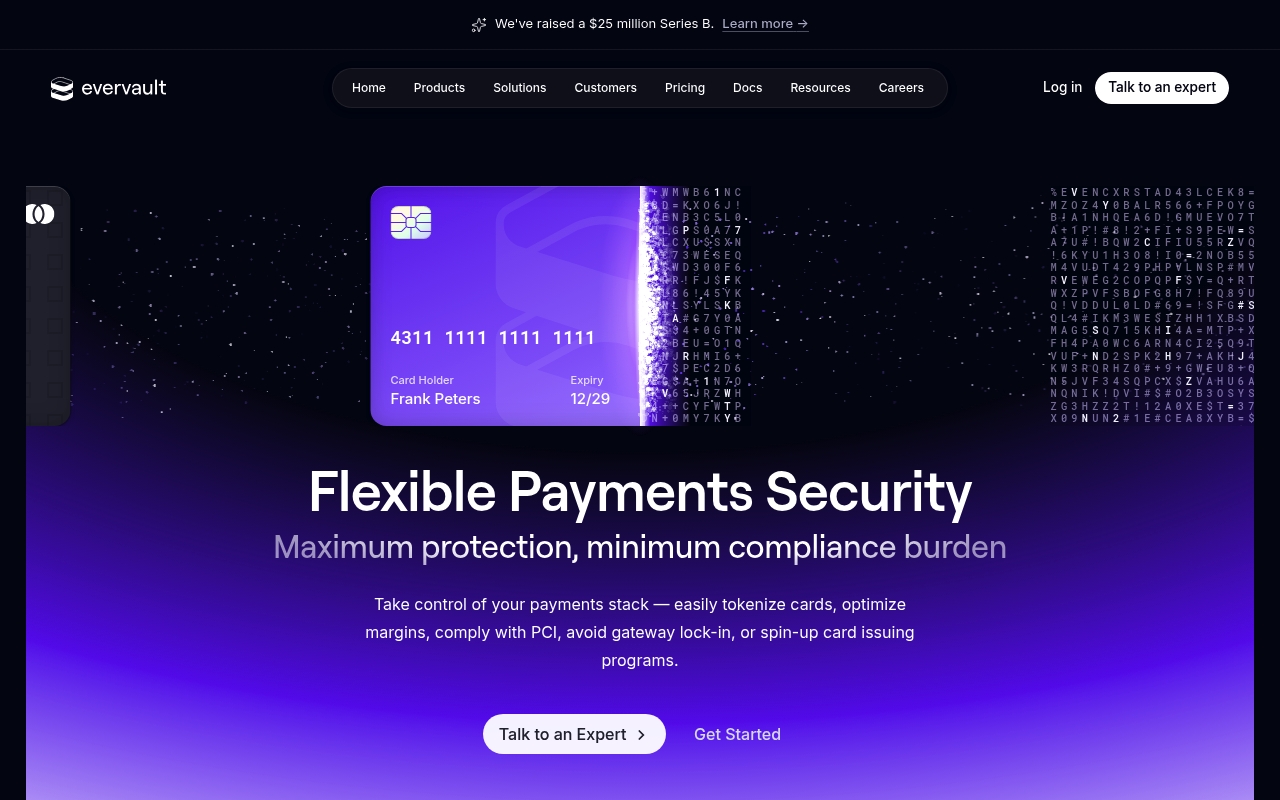
Evervault is a European cryptography company that lets developers encrypt sensitive data in transit and at rest without rearchitecting their systems. Rather than forcing teams to build custom encryption pipelines or rely on legacy HSM infrastructure, Evervault provides APIs and SDKs that integrate directly into applications—turning what was once a compliance headache into a developer experience problem.
The company operates at the infrastructure layer, sitting between your database and your users. It handles encryption orchestration, tokenization, and secure computation without requiring you to manage keys or understand the underlying cryptography. This means your data stays encrypted in your own cloud account, your keys stay with you, and third-party vendors never see plaintext information.
In a European market where data residency and privacy regulations have teeth, Evervault solves a real problem: companies need to protect customer data but can't afford to rebuild their entire tech stack. The platform works with existing databases, APIs, and infrastructure, making compliance less of an engineering ordeal.
Evervault positions itself as the encryption layer for modern applications—not a database replacement, not a VPN, but the plumbing that makes data protection feel native to your code. It's particularly relevant for fintech companies handling payment cards, personal identifiers, and healthcare records across distributed systems. The company is helping reshape how European companies think about security: not as an afterthought, but as architecture.
Categories
Fraud & SecurityIdentity & KYCRegTechFinancial Infrastructure
0
upvotes