Yapily
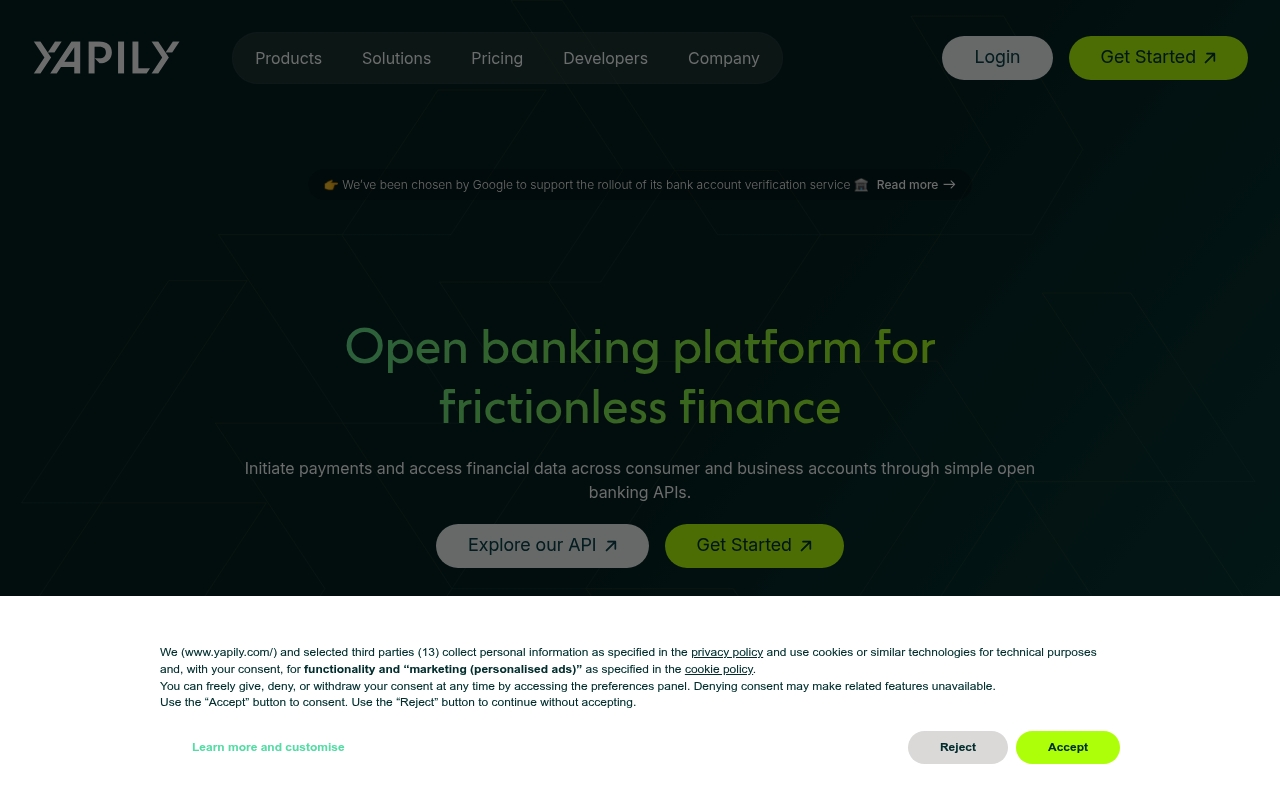
Yapily sits at the intersection of open banking and embedded finance, building the plumbing that lets fintech companies and enterprises tap into banking data and payments without reinventing the wheel. Founded in 2016, the London-based company operates as an API infrastructure layer—connecting to banks across Europe and beyond to unlock account information, payment initiation, and consent management at scale.
What makes Yapily different is how it abstracts away the complexity of working with hundreds of banks and their inconsistent technical standards. Rather than forcing developers to build individual integrations for each bank's API, Yapily provides a unified interface that normalizes everything. It's the translator between your app and the messy reality of legacy banking infrastructure.
The company operates in the B2B2C space, partnering with fintechs, neobanks, and enterprise software providers who need banking connectivity but lack the resources to build it themselves. Their customer base spans lending platforms, wealth apps, accounting software, and payment orchestration layers—essentially anyone whose product benefits from real-time access to customer bank accounts or the ability to initiate payments.
Yapily's positioning is deliberately unsexy: they're infrastructure, not consumer-facing. But that's precisely the point. In a landscape crowded with consumer fintechs chasing headlines, Yapily has built a quiet, profitable business serving the builders themselves. They're to open banking what Stripe is to payments—the backbone that lets innovation happen faster.