Tradeshift
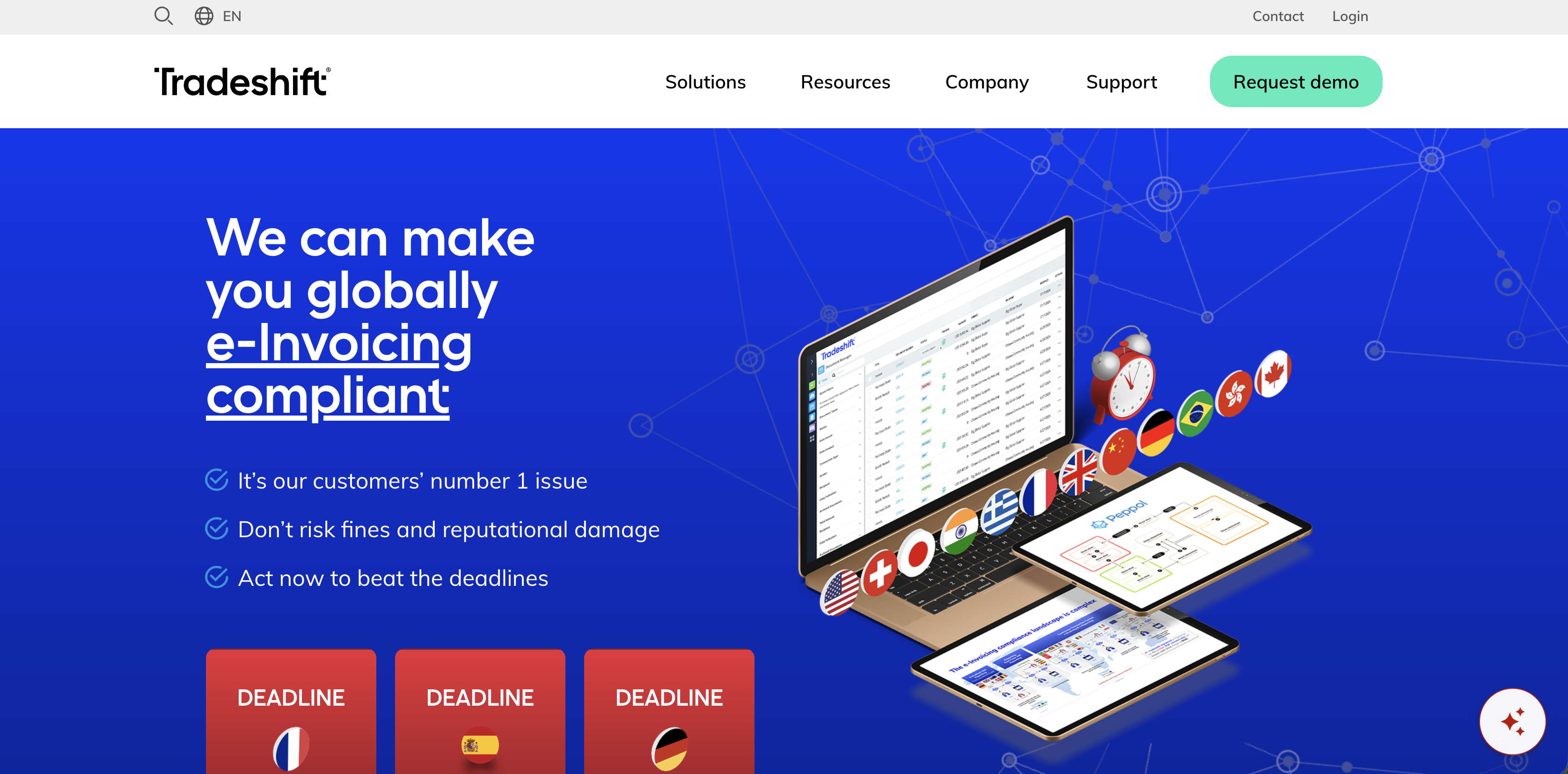
Tradeshift runs the operating system for global commerce—a cloud platform that lets businesses transact with each other in real time, from purchase orders to invoices to payments. It's built for a world where finance teams spend less time on manual reconciliation and more time on strategy, where supply chain visibility is instant, and where cash flow stops being a guessing game.
The company sits at the intersection of procurement, invoice management, and working capital, connecting enterprises with their supplier networks. Rather than forcing companies to adopt yet another SaaS tool, Tradeshift embeds itself into the workflows that already exist—automating the grunt work of B2B commerce that still happens through email, spreadsheets, and PDF attachments.
Trodeshift's positioning is distinctly European: it understands the complexity of multi-regional supply chains, VAT compliance, and the regulatory layers that global companies navigate daily. While American fintech still obsesses over consumer-facing dashboards, Tradeshift has spent years building the unglamorous but essential plumbing that keeps enterprise trading flowing.
In an era where digital transformation is finally table stakes for large corporates, Tradeshift has become infrastructure—the kind that companies discover they can't function without. It's not the flashiest story in fintech, but it's one of the most resilient.