Monzo
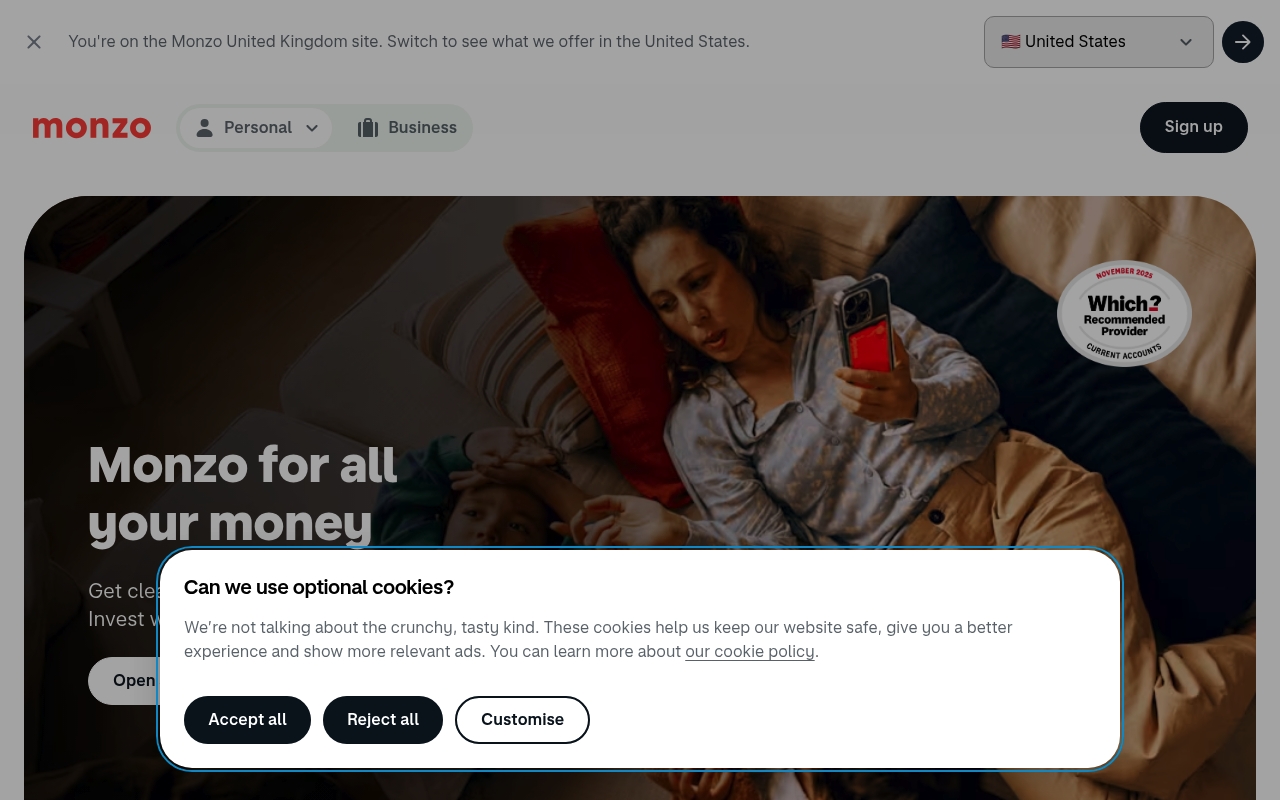
Monzo is a mobile-first digital bank that has spent the last decade proving that banking doesn't need to feel like a relic from the 1980s. Built for smartphones rather than retrofitted onto them, the app strips away the friction of traditional banking—opening an account takes minutes, spending notifications arrive in real time, and money management happens where you're already looking: your phone.
The company operates as a fully licensed UK bank, not just a payments layer on top of someone else's infrastructure. That matters. It means Monzo holds deposits, offers overdrafts, issues physical and virtual debit cards, and increasingly functions as a complete financial home for a generation that never wanted a branch.
What separates Monzo from the neobank noise is its relentless focus on customer experience and transparency. There are no hidden fees, no complicated terms, and the company communicates directly with users through in-app messaging. Spending analytics happen automatically; budgeting tools surface insights without lectures. The interface is designed for people, not processes.
In the European fintech landscape, Monzo represents the mature challenger bank—no longer purely disruptive, but profitable and expanding. It's expanded beyond the UK into Europe, launched business accounts, and continues to add services like savings pots and financial wellness features. It's the answer to the question: what happens when a digital bank stops experimenting and starts becoming the primary financial account.